

A cooking steamer is a pot used for steaming food. Steamers include traditional wooden steamers, aluminum steamers, bamboo steamers, etc., as well as electric steamers. Currently, traditional household steamers are generally made of stainless steel. When purchasing a cooking steamer, in addition to understanding the material, you should also choose the appropriate size and consider your home's stovetop. Let's learn more about cooking steamers.
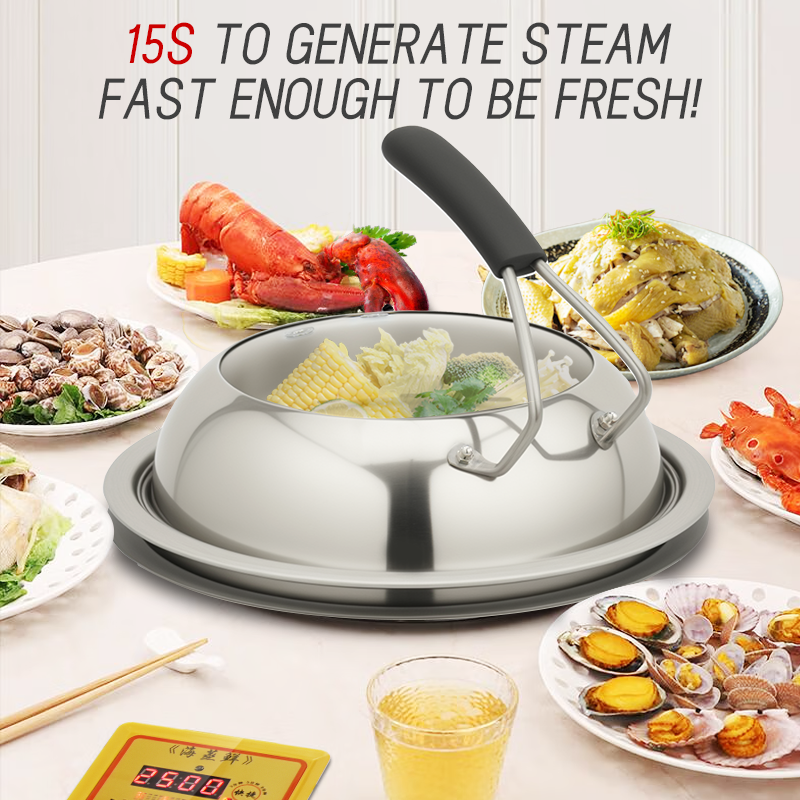
1. Food Steamer Material
When purchasing a commercial steamer, it's important to know what material it's made of. The material directly affects its durability and food safety. Among various materials, stainless steel steamers are the most popular choice because they are affordable, easy to clean, odorless, and durable. However, food-grade 304 stainless steel is generally considered slightly better for commercial steamers.
2. Food Steamer Capacity
What size electric food steamer is suitable for home use? When purchasing an electric food steamer, you need to consider the number of people in your household to choose the appropriate capacity. When purchasing an electric food steamer, if you have a large family, choose a larger capacity commercial steamer; if you have a smaller family, choose a smaller capacity electric food steamer for greater practicality.
3. Check the surface of the food steamer
When choosing a commercial steamer, check its surface quality. Generally, high-quality stainless steel steamers have a strong gloss and are mostly bright silver; while lower-quality steamers have a duller surface and are somewhat grayish-white. Also, check for obvious cracks, holes, repair marks, etc. If these problems are present, it is not recommended to buy the commercial food steamer.
4. Check the compatibility with your stovetop
Common household stovetops include induction cooktops, gas stoves, ceramic cooktops, and others. When purchasing a commercial food steamer, first check whether the steamer is compatible with your stovetop. Can a stainless steel steamer be placed on an induction cooktop? Magnetic stainless steel steamers can be used on induction cooktops.
5. Examine the bottom of the food steamer
Most non-magnetic steamers have an additional bottom, called a composite bottom. This composite bottom contains a magnetic plate. Since a non-magnetic steamer cannot be used directly on an induction cooker, the composite bottom allows it to be used, and it also prevents the steamer from deforming. A good steamer has a three-layer composite bottom with two layers of magnetic plates sandwiched between them, while some steamers only have a single simple magnetic layer. Even if the casing looks large, the magnetic conductivity is poor and it can shorten the lifespan of the induction cooker.
6. Examine the lid of the food steamer
Commercial food steamers come in three types of lids: steel, glass, and combination. Lower-end magnetic steamers generally use glass lids, which allow for easy monitoring of the food. Mid- to high-end commercial food steamers often use combination lids, which are more expensive.
7. Examine the handle of the food steamer
Commercial food steamer handles come in two types: fully enclosed and insertable. Fully enclosed handles prevent the steamer from detaching and causing danger. Commercial food steamers are made of materials such as bakelite, recycled plastic, plastic, and steel. Most steamers are made of bakelite, which has high mechanical strength, good insulation, heat resistance, and corrosion resistance.